15 Web Design Principles for a Customer-Friendly Website
15 Web Design Principles for a Customer-Friendly Website

Imagine walking into a retail store to look for some new work clothes. You notice stains on the floor, disorganized shelves, and a strange odor as you look around. Would you stay in the store and buy from the retailer?
Store design influences how customers behave — the same is true of websites.
Why Is Good Web Design Important?
The average web designer earns $ 57,000 annually— about $8,000 more than junior web developers who average $44k annually. Designers are compensated reasonably well for a good reason: their work is vital so bad that I demand that level of service from every provider now. We also try to be at that level with our SaaS tool support.
When a new lead visits your website, it sets the first impression that shapes their future interactions with your brand. It is at this point that they develop their first opinion about you.
Your website also conveys your brand’s identity, vision, and position within the industry. If you have close competitors with a similar product, a website that makes people say “wow” will make you more memorable and boost your brand awareness above the competition.
Additionally, a strong website can improve your search engine optimization(SEO) efforts.
Search engines consider how people respond to websites when ranking them in search results. Web Designing House is a famous company for providing the best services in the market. The Medical Records Department (MRD) has become an essential department in every hospital. It efficiently provides multiple services not only to patients but also to the hospital and plays an important role in health promotion and patient care quality. This role in the department is very important because all the patient's information is recorded on a file or computer. It is easy to check any patient's information. If your bounce rate is low and people frequently visit multiple pages on your site, search engines will likely rank you higher than a competitor with a high bounce rate.
Technical SEO is also important here. Websites with well-designed titles, page structures, and links are more accessible. Thus, search engines and customers alike favor them. Let’s take a look at some important web design principles.
15 Principles of Effective Web Design
When we refer to “web design principles,” we refer to general rules for designing the textural and visual elements of a website or web page. Every brand embraces web design principles differently — some in line with best practices and others not.
To help you craft an excellent website, here are 15 web design principles (plus examples of websites that use them effectively):
1. Pages Should Be Easy to Navigate
In Clutch’s study into user experiences on websites, 94% of participants viewed website navigation as the “most important website feature.”
It’s no surprise why. If a search engine user comes to your website looking for information on “mobile design” and can’t find it, the natural next step is to click “back” and try another website.
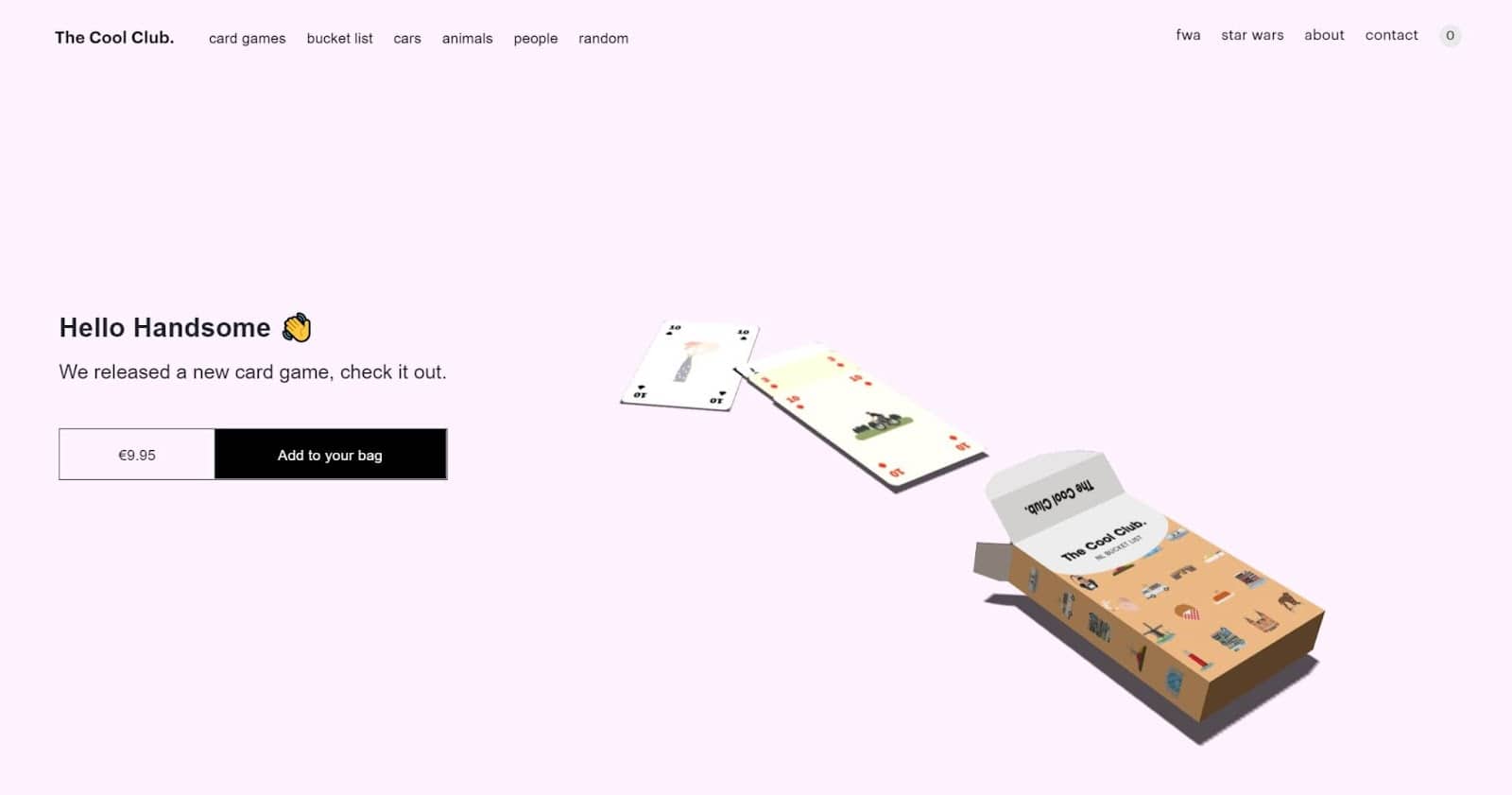
How do you embrace well-planned navigation? Draw inspiration from The Cool Club’s website.
When you enter the Cool Club’s homepage, the website’s layout is extremely clear. You can navigate to key product sections (like “card games” and “bucket list”) using the buttons on the left-hand side, and you can navigate to the “about” and “contact” pages using the buttons on the right.
The Cool Club’s product pages are also very easy to navigate. The brand currently has an interactive card deck that features 54 cool variations and corresponding pages. You simply scroll down and click on the card you want to see more of.
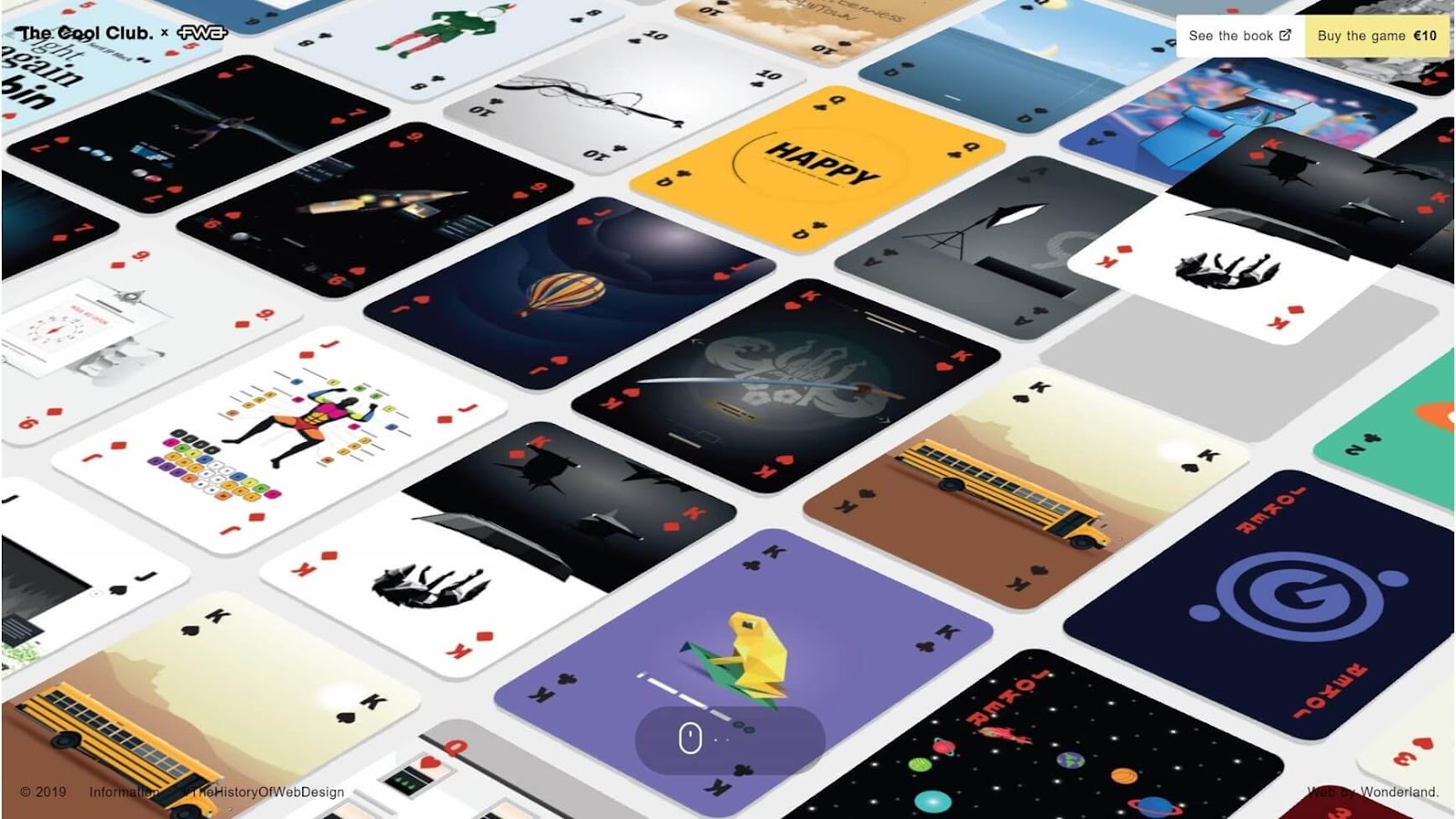
To create a similarly effective website, sort content into clear categories for your headers and footers and give them descriptive titles. Then, order your pages by topic, so people can navigate between similar topics easily.
Additionally, make your header and footer consistent throughout your website.
2. Always Leverage Negative Space
Negative space (or “white space”) is the region around the subjects of a page, whether they be images, videos, text, or buttons.
Many enthusiastic marketers rush to fill every free space on a page, hoping that giving visitors more information will get them more engaged. However, this often results in overwhelming and confusing pages.
That’s where negative space comes in. Using negative space emphasizes the most critical elements of each page, as the lack of color draws the visitor’s eyes to brighter areas.
Of course, “use negative space” doesn’t mean “create a boring white website.” Instead, you can leverage space using your brand colors, just like Garoa does.
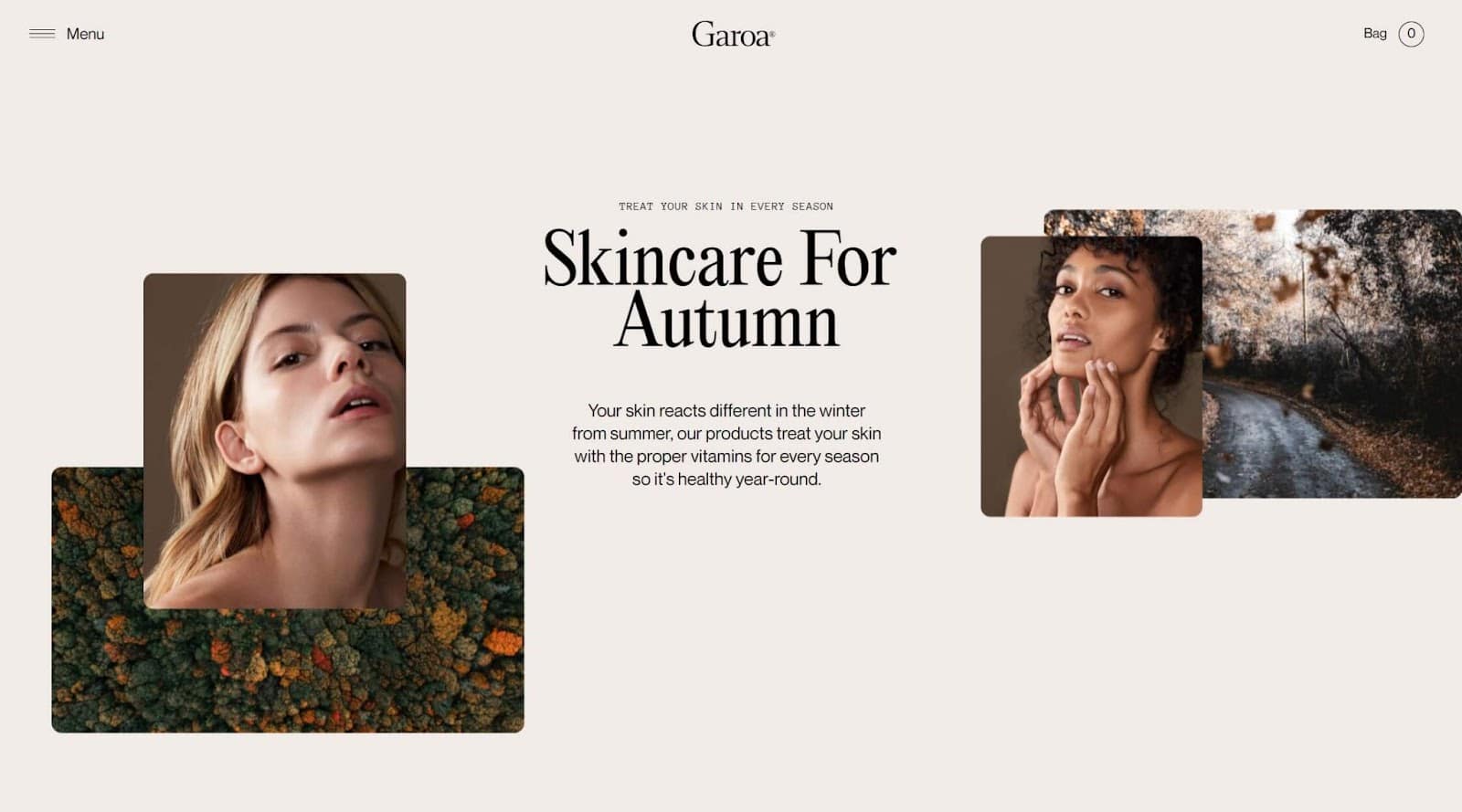
Garoa’s homepage uses a cream-like palette to build ambiance while still leveraging negative space. The result is that your eyes go to the introductory content in the “skincare for autumn” section in the center instead of the less important parts.
3. Pages Should Be Consistent, But Engaging
When you read brand names like “Cadbury,’ “Hershey’s,” or “Nike,” the vision of their logos, fonts, and design styles likely comes to mind immediately. That’s the power of consistent branding.
When designing your website, craft pages with consistent elements to give your brand a clear visual identity. That means:
- Using the same fonts, styles, and colors across headers
- Keeping spaces between visual elements the same between pages
- Using color palettes instead of random colors
- Setting layout guidelines for long-form content like news pieces and blog posts
- Using a website template for all pages
Consistent pages don’t need to look completely uniform. Instead, you can balance consistency and engagement by mixing up elements.
For example, you can use different fonts and colors for H1, H2, and H3 headings. Or, you can alter the layout of different types of pages, to mix things up.
4. Embrace Complementary Colors
Complementary colors are pairs of colors you can mix without making your design look overwhelming and ugly.
The way colors display on a screen follows the Red, Green, and Blue (RGB) color model rather than the Cyan, Magenta, Yellow, and Black (CMYK) model used in printing. Painters also often use the Red-Yellow-Blue (RYB) color model that considers complementary colors to be red-green, blue-orange, and yellow-purple.
No matter which model you prefer, using complementary colors achieves a similar purpose to black and white. Web Designing House is the best company ever. Access Modifiers in PHP can access the properties and methods to which they have access.
There are three
access modifiers:
- public - the property or method can be
accessed from everywhere. This is default
- protected - the property or method can be
accessed within the class and by classes derived from that class
- private - the property or method can ONLY be
accessed within the class.
Complementary colors provide emphasis and create a clear visual identity for your brand.
You can see this on Swab The World’s website.
In the screenshot below, the blood cancer charity uses green and shades of magenta. These colors change to other complementary color combinations when you visit different website sections (though all the colors have similar saturation, so the branding remains consistent).
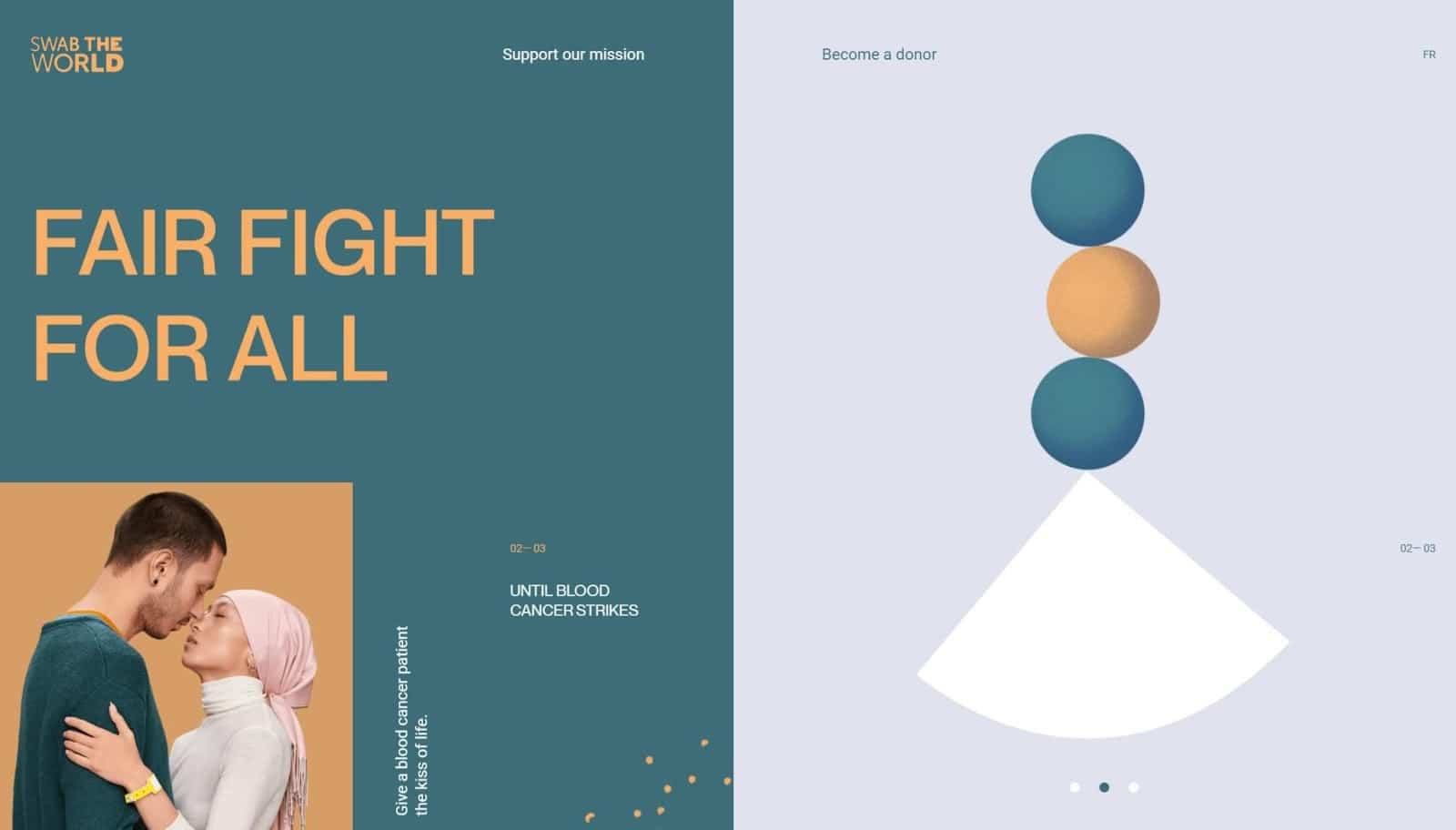
Complementary colors are an easy principle to use in your design. If you want to keep things simple, select two complementary colors and add them to contrasting elements (like an H2 and body text). Or use multiple shades of each color on each page.
5. Design With Your Target Audience in Mind
If you look at The Cool Kids, Garoa, and Swab The World’s websites, you may notice that each website has a unique “feel.” That feel comes from tailoring the design of the website to the audience.
Personalization is the ultimate goal here. Most of us like to buy products and services from brands we feel aligned with and represented by. In fact, research shows that 72% of consumers value purchasing from companies that “align with their beliefs and values.” So, if someone visits your website and sees their values, goals, and priorities reflected there, they are more likely to purchase from you.
To personalize your website design to your audience, consider:
- What images resonate with your target market, specifically
- What tone works for your audience (for example, professional, minimalistic, bubbly, etc.)
- What topics your target market comes to your website to see
- How you can convey your brand positioning through your web design
- What calls-to-action (CTAs) your audience responds to (and where you should put them to optimize your click-through rate(CTR).
Bonus points if you can use website automation to deliver a personal experience based on the user’s profile and previous interactions with your brand.
It might be helpful to draw inspiration from competitors or brands that sell different things to your target demographic.
6. Fonts Should Be Readable And Accessible
The fonts you use on your website determine whether your visitors can read what you wrote or not. Safe to say, they are very important.
The first thing to consider when selecting a font is web safety. Web-safe-fonts are supported by operating systems and web browsers, so they’ll work on most devices.
You also need to consider accessibility. Accessible fonts should be clear and easy to read at large and small sizes. For example, cursive-based fonts aren’t very accessible, while Times New Roman is fairly accessible.
Additionally, watch for trends in fonts on other websites when selecting a font. In 2021, data scientist Michael Li analyzed the fonts on over 1,000 websites. He found the following trends:
- 85% of fonts don’t use serifs (the little added lines to letters in newspaper type)
- The top five fonts include Sans Serif, Arial, Helvetica, Helvetica Neue, and Roboto
- H1 headers have a 58% probability of having no serifs (compared to 93% for paragraph text)
- The two most common sizes for paragraph fonts are 14 px and 16 px
You might choose to embrace this information to select a font style that adheres to what people look for in websites. Or, you might choose to do something different.
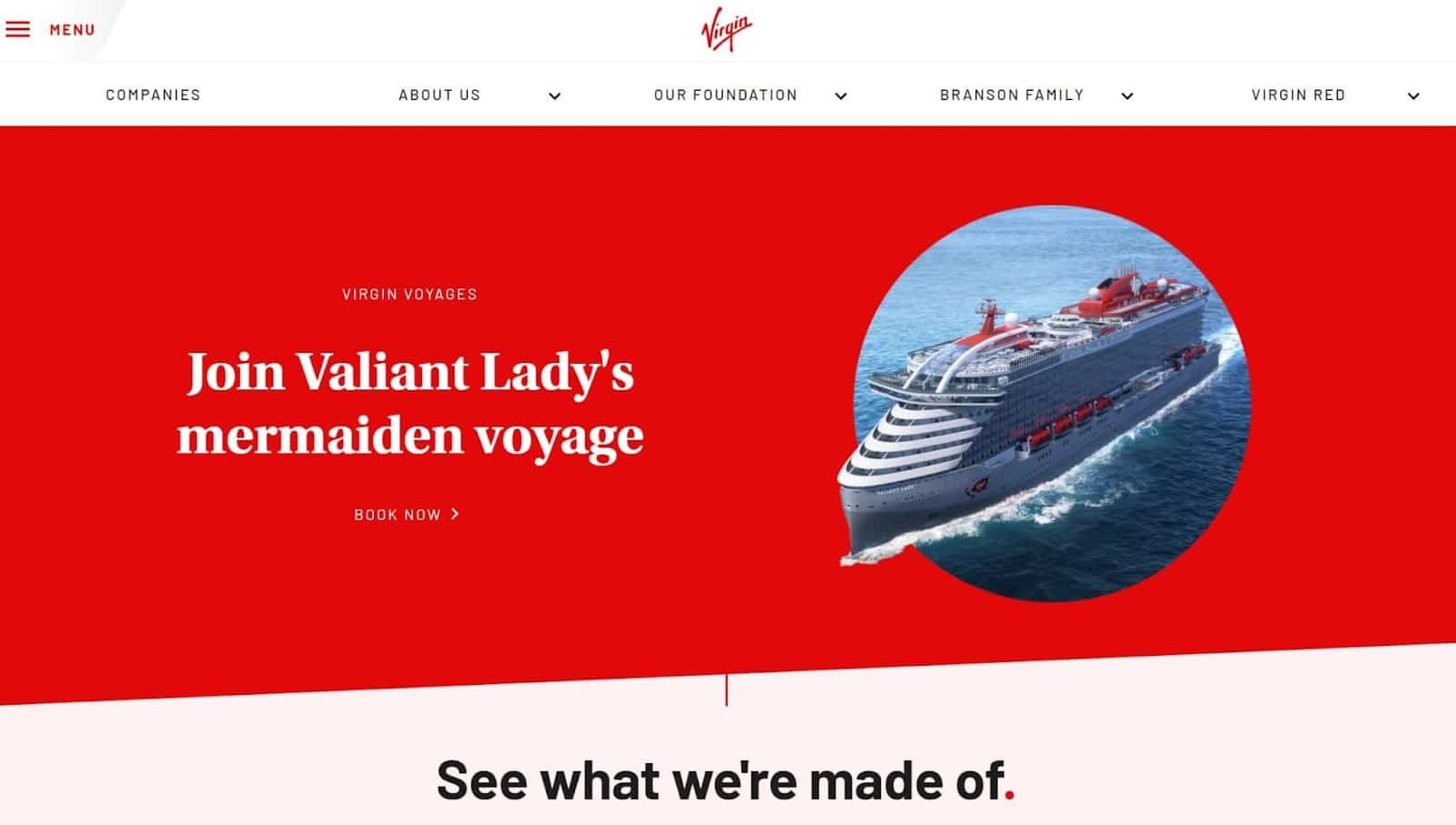
Virgin is a brand that chose the second option. Virgin used at least five fonts in the screenshot below. These fonts separate sections of the page and make them look engaging.

Comments
Post a Comment